
In the fast-evolving world of SEO, search engines are increasingly rewarding websites that demonstrate Topical Authority in SEO. Unlike traditional keyword-focused optimization, which often targets single keywords or phrases, topical authority emphasizes expertise, comprehensiveness, and relevance across an entire topic. In this article, I will explain what topical authority is, why it matters, how search engines evaluate it, and strategies you can implement to strengthen your authority for higher search rankings.
What is Topical Authority in SEO?
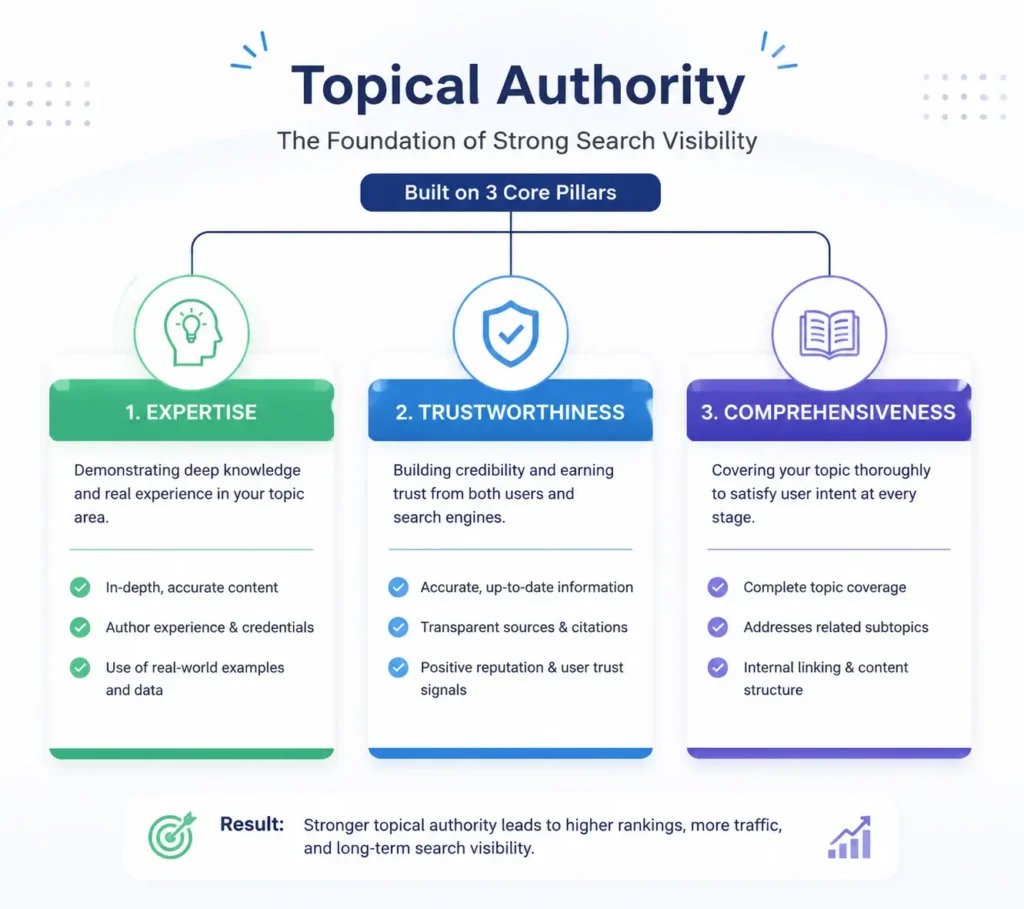
Topical authority refers to the level of expertise, trust, and comprehensiveness a website or author demonstrates on a particular subject. When a site consistently publishes high-quality content covering all aspects of a topic, search engines like Google recognize it as an authoritative resource.
Key aspects of topical authority include:
- Expertise: Demonstrating deep knowledge through well-researched content.
- Comprehensiveness: Covering the breadth and depth of a subject.
- Trustworthiness: Providing accurate, reliable, and referenced information.
- Consistency: Regularly updating content to reflect new insights or trends.
For example, a website focusing on SEO optimization that publishes guides on on-page SEO, off-page SEO, link building, technical SEO, site speed, and Core Web Vitals can be seen as a topic authority.
Why Topical Authority Matters in Modern SEO
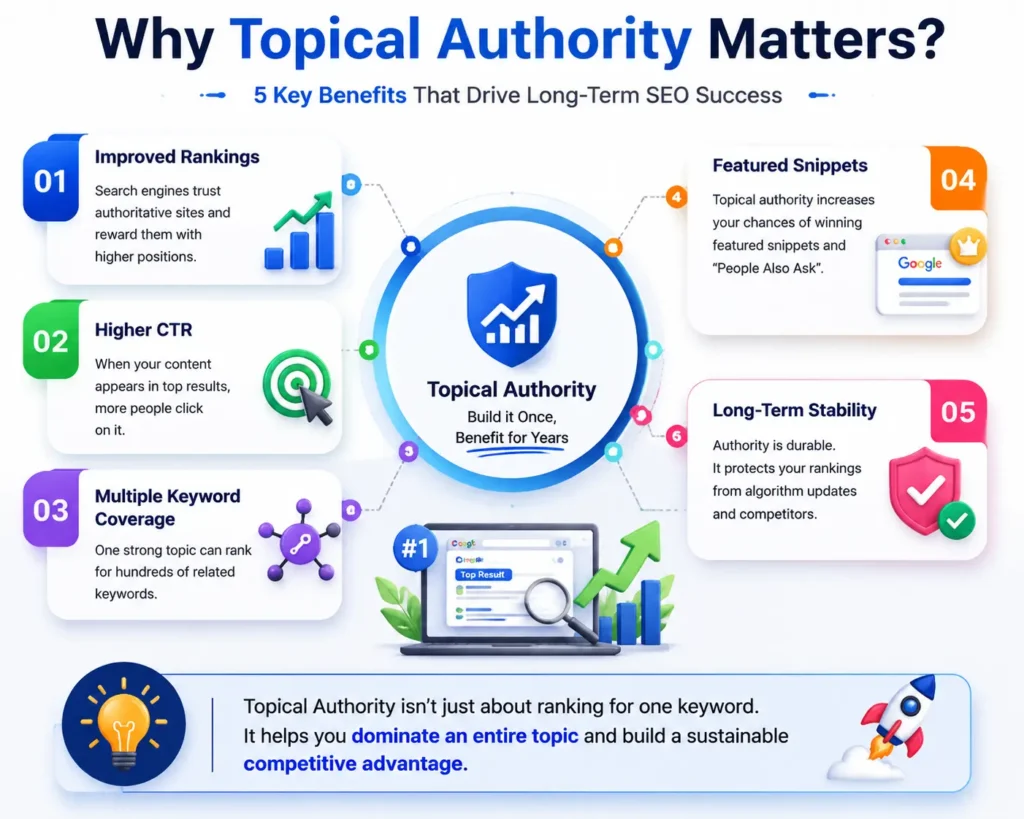
Topical authority has become a critical factor in search engine rankings due to the following reasons:
- Enhanced Trust and Credibility: Search engines prioritize websites that consistently demonstrate expertise and reliability.
- Improved Ranking for Multiple Keywords: Authority sites can rank for multiple related keywords, not just one target keyword.
- Higher CTR and Engagement: Users trust authoritative websites, increasing clicks, dwell time, and reducing bounce rates.
- Featured Snippets & Knowledge Panels: Google often selects content from authoritative sources for rich results.
- Long-Term SEO Stability: Sites with strong topical authority maintain rankings better during algorithm updates.
Semantic SEO now ensures that not just exact-match keywords but related phrases, synonyms, and LSI keywords are considered. This means your content must be comprehensive and naturally include supporting terms.
How Search Engines Evaluate Topical Authority
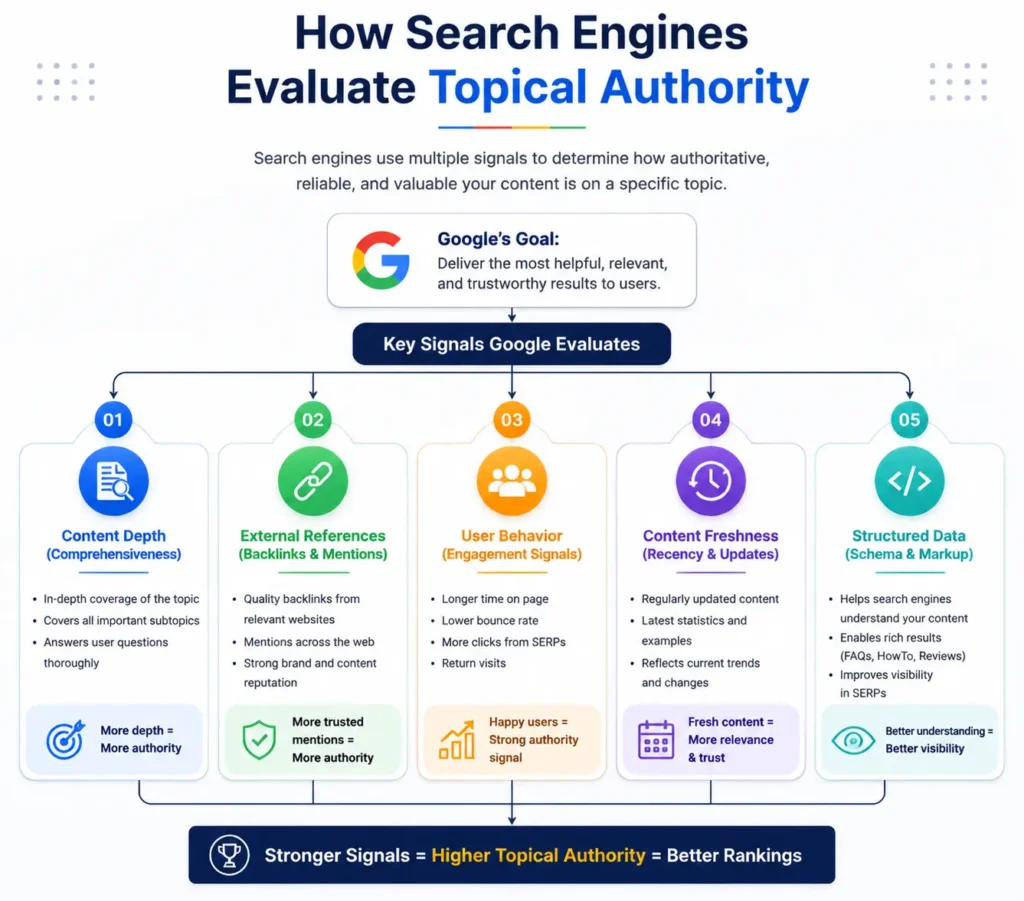
Google and other search engines use complex algorithms to evaluate authority, including:
- Content Depth and Coverage: Full coverage of the topic with internal linking across related subtopics.
- External References & Citations: Quality backlinks from authoritative sources signal trust.
- User Behavior Signals: Engagement metrics such as time on site, pageviews, and return visits.
- Content Updates: Regularly updated content demonstrates current expertise.
- Structured Data & Schema: Properly marked-up content helps search engines understand relationships between content pieces.
Example:
If a website publishes a series on SEO covering all aspects like keyword research, on-page optimization, backlink strategies, content marketing, and Core Web Vitals, and links them internally, Google is more likely to see it as an authority.
Strategies to Build Topical Authority
Building topical authority requires a holistic approach. Here’s how you can achieve it:
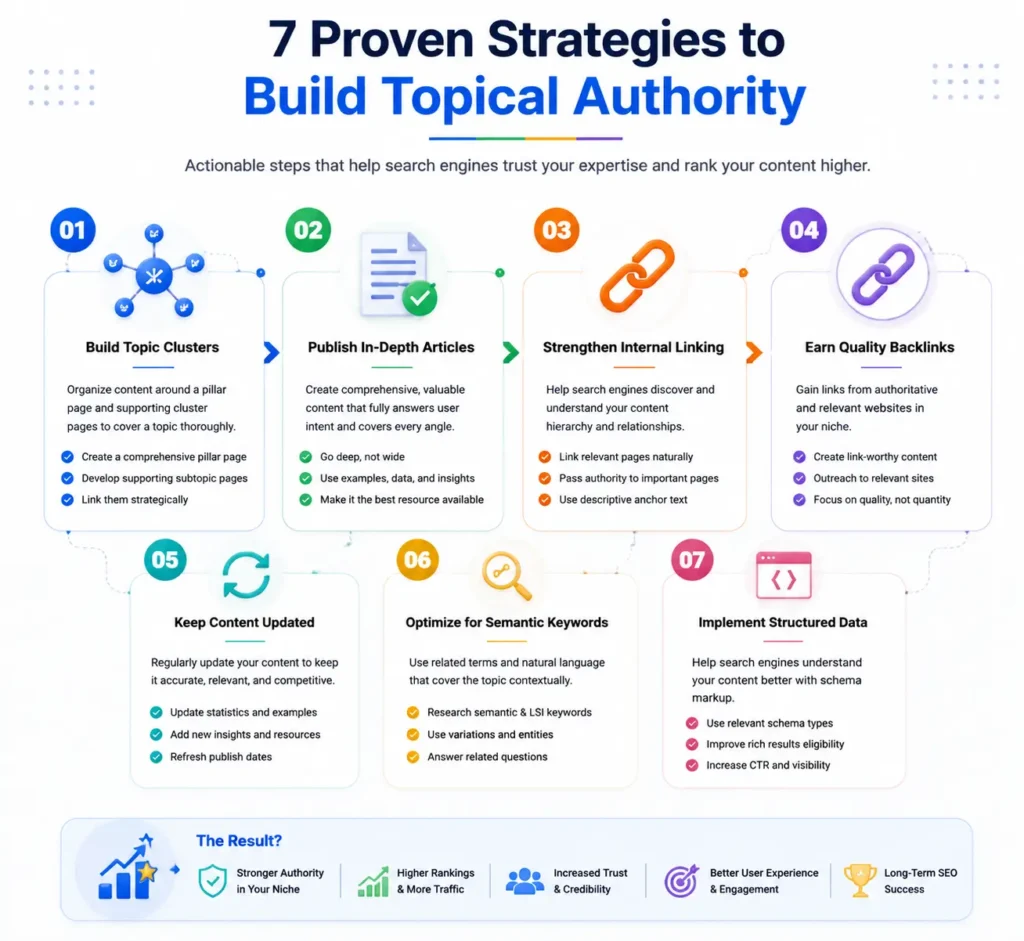
1. Create Comprehensive Topic Clusters
- Organize your content into clusters with a pillar page covering the main topic.
- Link all related subtopics to the pillar page to improve internal SEO structure.
- Example: Pillar page on “Complete SEO Guide” linking to detailed articles on on-page SEO, off-page SEO, link building, technical SEO, and analytics.
2. Write Detailed and In-Depth Articles
- Ensure each article is long-form (1500+ words) and provides actionable insights.
- Include real-world examples, case studies, and screenshots to demonstrate expertise.
- Semantic keywords should be naturally integrated.
3. Use Internal Linking Strategically
- Connect related posts using internal links to enhance crawlability.
- Example: Link your off-page SEO article to your topical authority guide to strengthen relevance.
- Anchor texts should be natural and descriptive, balancing branded, exact-match, and generic terms.
4. Earn Quality Backlinks
- Backlinks from authoritative websites are crucial to demonstrate credibility.
- Focus on niche-relevant sources for contextual backlinks.
- Techniques include guest posting, resource page submissions, expert interviews, and PR mentions.
5. Regular Content Updates
- Update content to reflect new trends, algorithm updates, and case studies.
- Fresh content signals ongoing authority to search engines and readers.
6. Optimize for Semantic Search
- Use LSI keywords and related terms throughout your content.
- Tools like LSI Graph, Ahrefs, or SEMrush can help find relevant semantic keywords.
- Example: For “Topical Authority SEO,” include phrases like “expert SEO content,” “SEO topic clusters,” “authority building strategies.”
7. Structured Data for SEO & AEO
- Implement schema markup for articles, FAQs, and author profiles.
- This helps AEO (Answer Engine Optimization) by enabling search engines to display answers directly in rich snippets.
- Include organization schema to highlight your authority (iGrowthSEO).
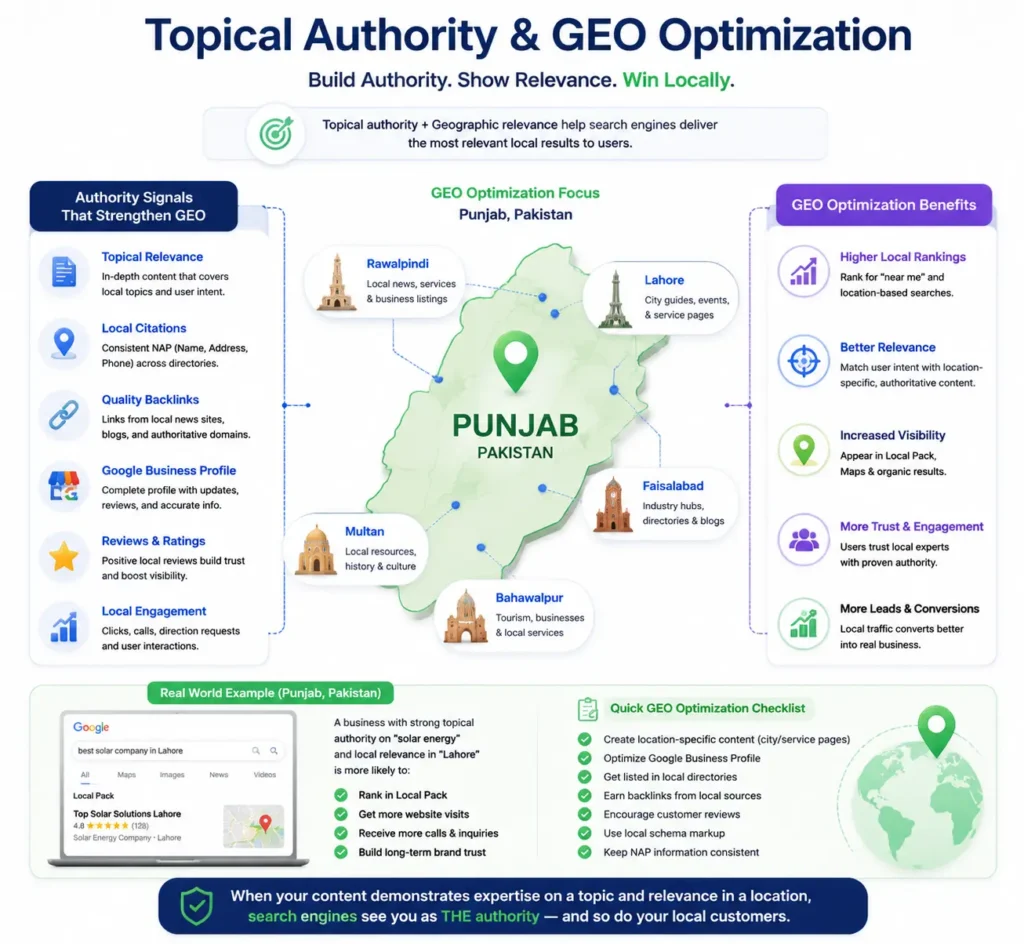
Topical Authority and GEO Optimization
To target geographic search queries (GEO):
- Include location-specific examples and case studies.
- Add structured data with local business information if relevant.
- Example: “I helped multiple businesses in Punjab, Pakistan, improve local search rankings with comprehensive SEO strategies.”
- Localized content increases visibility in Google Maps, local search packs, and regional queries.
Real-World Example
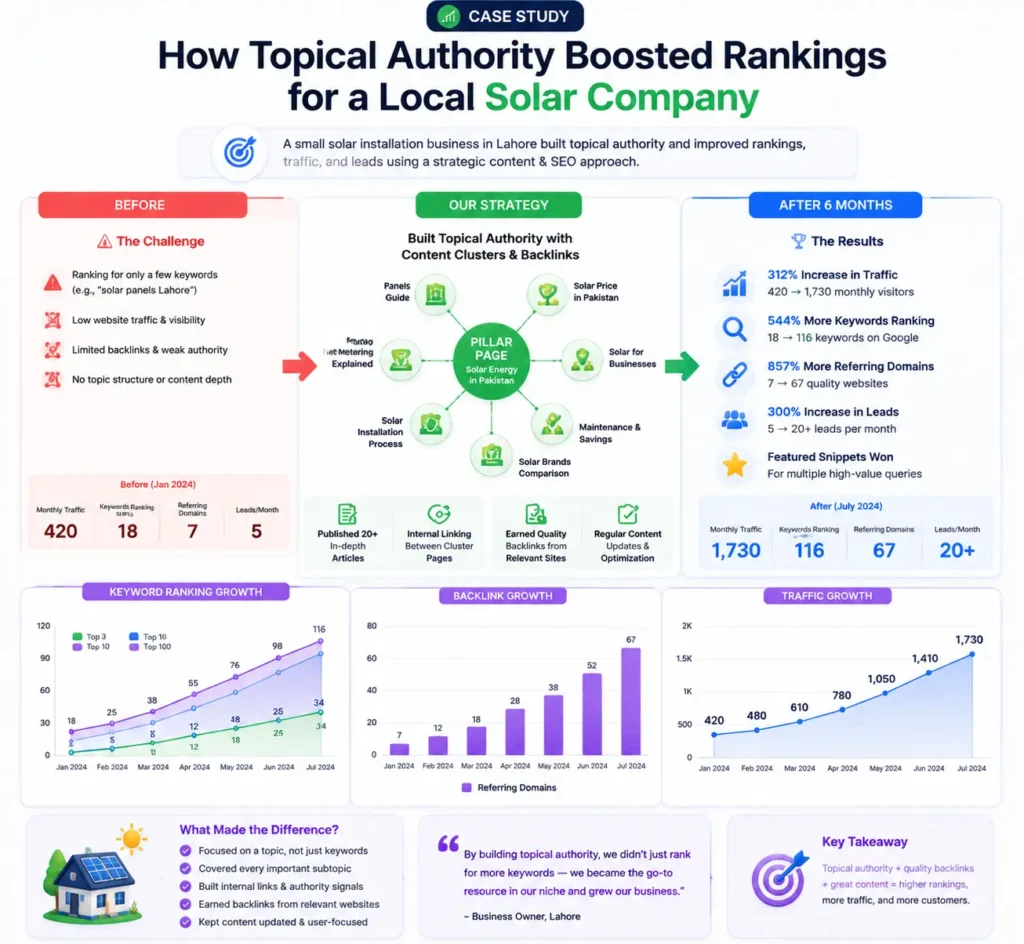
Imagine you want to rank for “SEO strategies for small businesses in Pakistan”. By building topical authority:
- Publish a comprehensive guide for small businesses.
- Link related articles: on-page SEO, local SEO, backlinking strategies.
- Use examples from local businesses you’ve optimized.
- Acquire backlinks from Pakistani SEO blogs, business directories, and forums.
This creates a strong authority signal for both search engines and users in your GEO.
Measuring Your Topical Authority
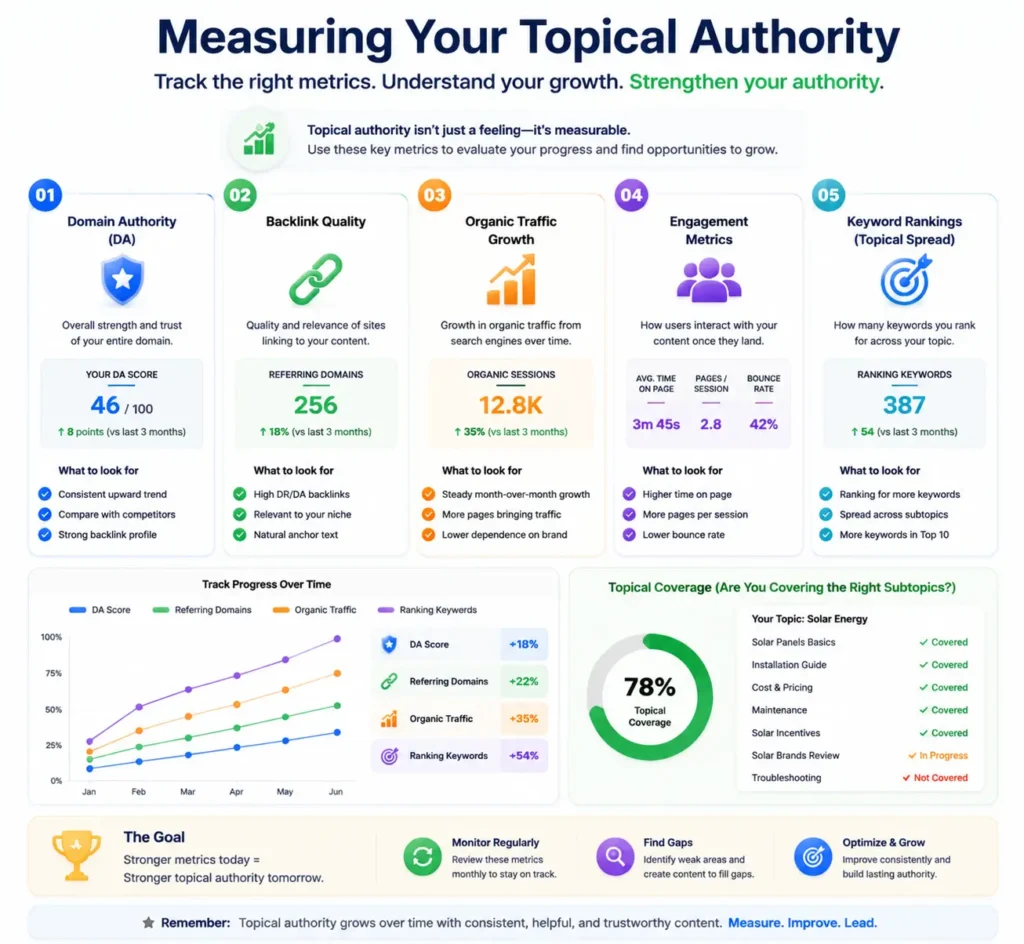
Metrics to track authority:
- Domain Authority (DA) & Page Authority (PA): Shows how well Google trusts your site.
- Backlink Quality: High DA backlinks indicate strong authority.
- Traffic Growth: Consistent organic traffic increase shows expertise.
- Engagement Metrics: Low bounce rate, higher session duration.
- Keyword Rankings: Topical coverage can rank for multiple related keywords.
Conclusion
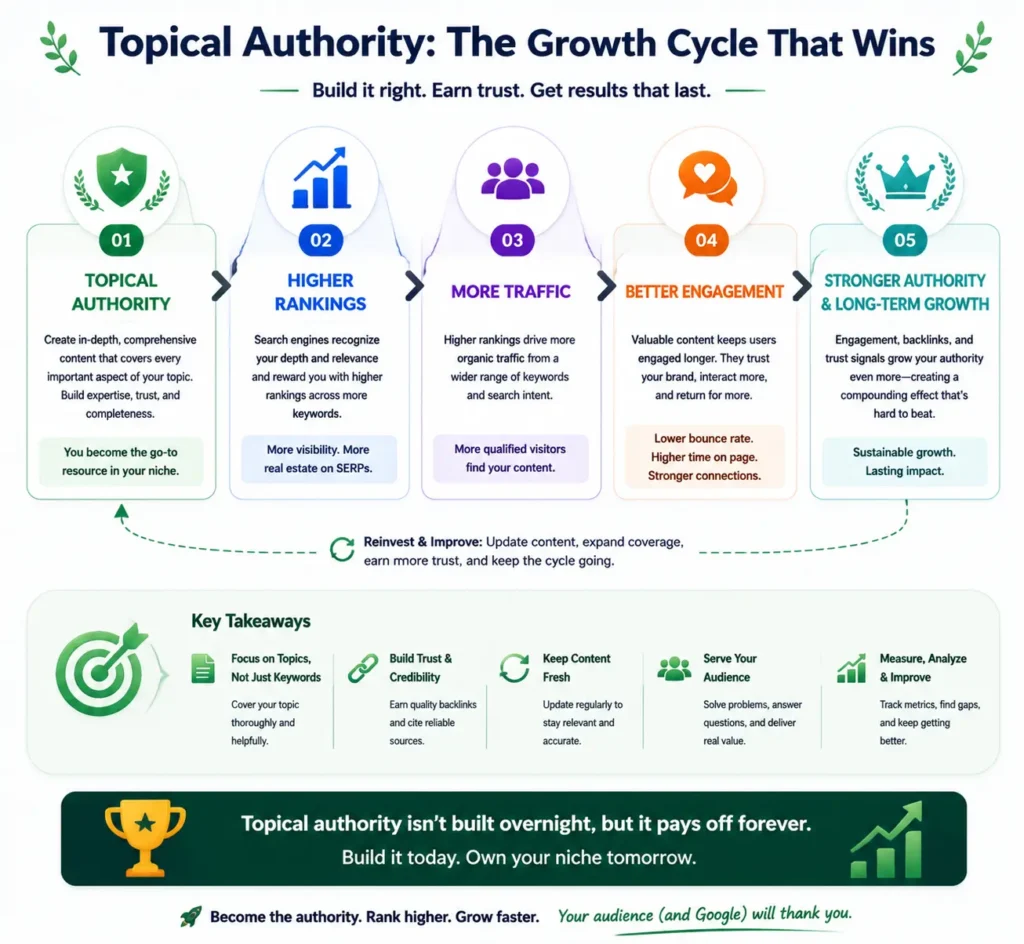
Topical authority is no longer optional in modern SEO; it is essential. By demonstrating expertise, trustworthiness, and comprehensiveness, your content is more likely to:
- Rank for multiple keywords
- Earn higher CTR
- Gain organic traffic
- Appear in rich snippets and Google Discover
I leverage my experience at iGrowthSEO to implement these strategies for clients, combining SEO, AEO, and GEO techniques to ensure content ranks and engages audiences globally and locally. By following these methods, any website can establish itself as a trusted authority in its niche.