
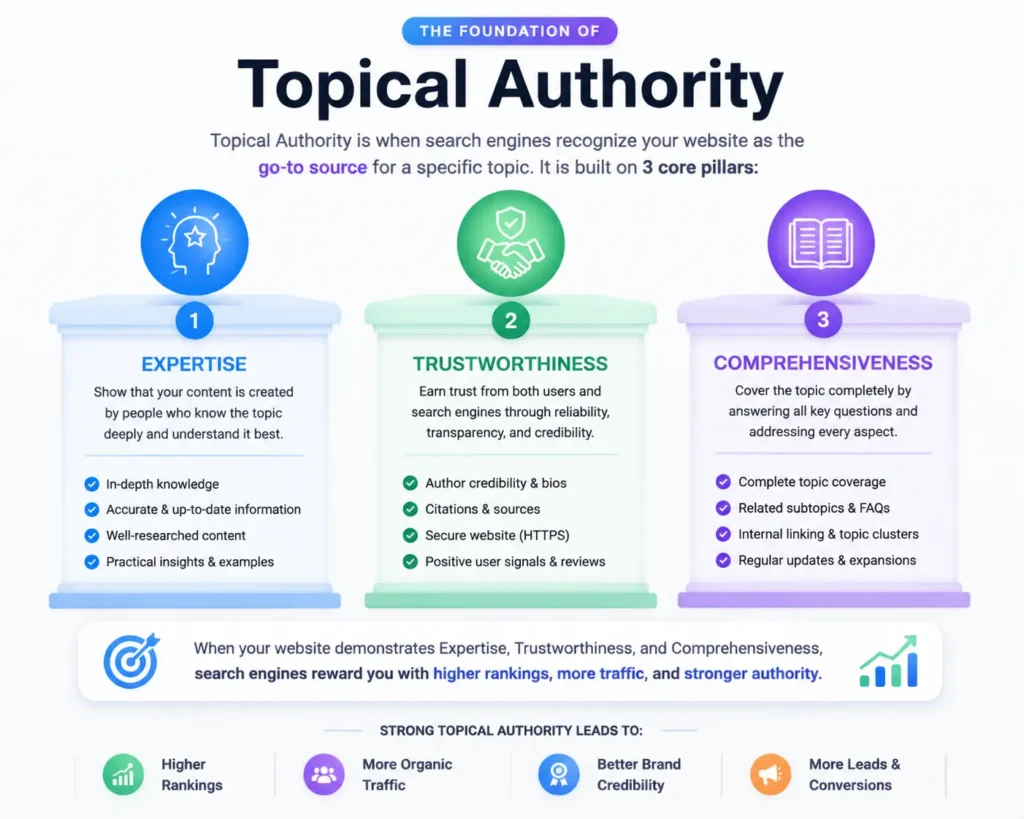
Search Engine Optimization (SEO) is the cornerstone of online visibility. Whether you’re a business owner, blogger, or digital marketer, mastering SEO allows your website to rank higher, attract more visitors, and generate better leads. In this complete SEO starter guide, I’ll explain how search engines work, why topical authority matters, and practical strategies to boost your website’s authority, visibility, and rankings.
How Search Engines Work
Search engines like Google use complex algorithms to crawl, index, and rank content. When a user types a query, the search engine analyzes millions of pages to deliver the most relevant results. Factors like relevance, user intent, content quality, backlinks, and site performance influence rankings.
Tip: Understanding these mechanics ensures your content aligns with SEO best practices, maximizing organic reach.
SEO Basics for Beginners
SEO can seem overwhelming, but it boils down to three main components:
- On-Page SEO – Optimizing content, headings, images, internal links, and URLs. Read our full On-Page SEO guide
- Off-Page SEO – Building authority through backlinks, brand mentions, and social signals. Check our Off-Page SEO guide
- Technical SEO – Improving site speed, mobile responsiveness, SSL, and crawlability.
Keyword Research & Content Planning
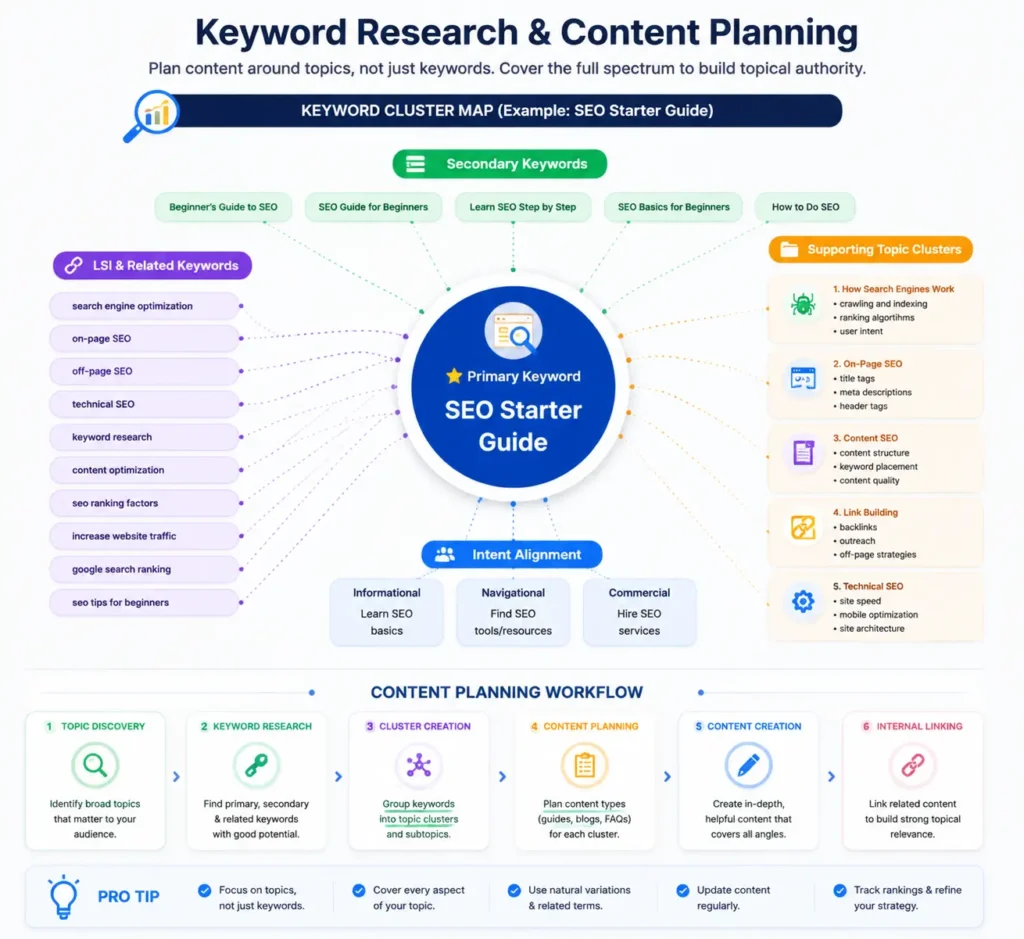
- Identify primary and secondary keywords using tools like Google Keyword Planner, Ahrefs, or SEMrush.
- Map content topics around clusters to establish topical authority.
- Use LSI keywords and semantic phrases to improve relevance.
- Example keywords: “How Search Engines Work,” “Beginner’s Guide to SEO,” “Add images to your site and optimize them”.
Tip: Keyword research also guides internal linking and content hierarchy.
Creating High-Quality Content
High-quality content is crucial to rank for multiple keywords. Each article should be:
- Detailed and actionable: Solve real user problems.
- Well-structured: Use headings, bullet points, tables, and images.
- Engaging: Include examples, case studies, and screenshots.
If you offer Website Design and Core Web Vitals optimization, mention it as a solution to improve site performance and user experience.
On-Page SEO Strategies
Your content must include:
- SEO-friendly titles & meta descriptions.
- Optimized headings (H1-H3) with focus and LSI keywords.
- Internal linking between related articles (e.g., link to your On-Page & Off-Page SEO guides).
- Optimized images with alt tags and proper file size.
- Fast loading speed and mobile responsiveness.
Tip: RankMath helps monitor and optimize all on-page elements for SEO and AEO.
Off-Page SEO and Link Building
Off-Page SEO strengthens your website authority:
- Acquire high-quality backlinks from authoritative sites.
- Use a mix of do-follow and no-follow links.
- Anchor text distribution should be natural (brand, exact match, generic).
- Engage in guest posting, forum participation, and social bookmarking.
Example: Linking your blog posts to external, authoritative sources improves trust and topical relevance.
Technical SEO Essentials
- Ensure website speed (Core Web Vitals: LCP, FID, CLS).
- Enable SSL certificates.
- Fix broken links and optimize site architecture.
- Submit an XML sitemap to Google Search Console.
Tip: Optimizing these technical elements ensures your content is crawlable and indexable.
Local SEO and GEO Optimization
If your target audience is location-specific:
- Create location-based pages (Punjab, Pakistan, etc.).
- Optimize Google Business Profile and local citations.
- Include region-specific content for better discoverability.
Tip: Local SEO signals boost your visibility on Google Maps and in geo-targeted search results.
Tracking and Measuring SEO Performance
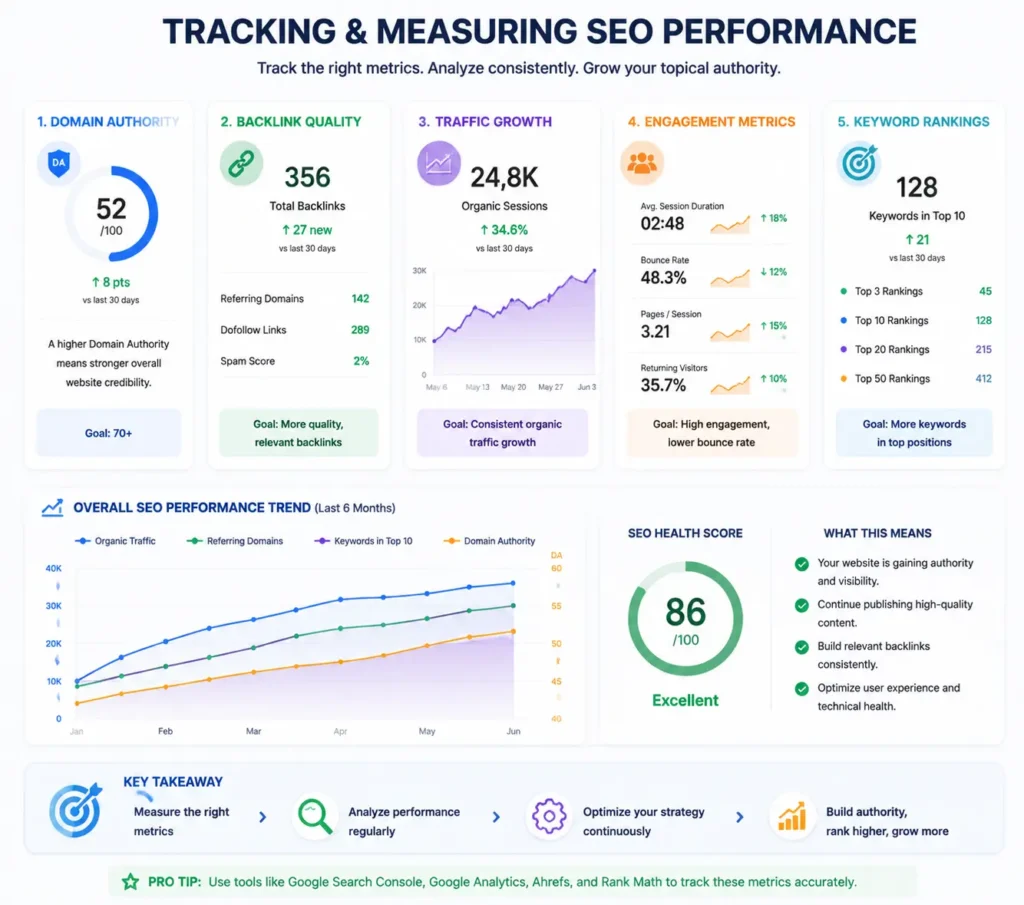
Use metrics to assess success:
- Traffic growth: Organic sessions over time.
- Keyword rankings: Monitor focus and LSI keyword positions.
- Engagement metrics: Bounce rate, average time on page.
- Backlink quality: Referring domains and domain authority.
- Topical authority: Number of comprehensive topic clusters.
Tip: Visual dashboards help track and refine strategies effectively.
Real-World Example
Suppose a small business wants to rank for “SEO Starter Guide”. By creating topical content clusters covering all 10 chapters (SEO Basics, Keyword Research, On-Page SEO, Link Building, etc.), and linking internally while acquiring authoritative backlinks, the business can:
- Rank for multiple keywords.
- Increase organic traffic.
- Improve trust and authority.
- Generate leads via service promotion.
Service Integration: You can mention your Website Design and Core Web Vitals fix services as practical solutions to implement SEO strategies.
Conclusion
Mastering SEO requires attention to content quality, topical authority, link building, technical optimization, and GEO relevance. Implementing these strategies ensures your content ranks high, attracts targeted traffic, and establishes trust with your audience.
By following this comprehensive SEO Starter Guide, leveraging AEO and GEO signals, and implementing proven strategies, your website can dominate search results and maintain long-term authority.